
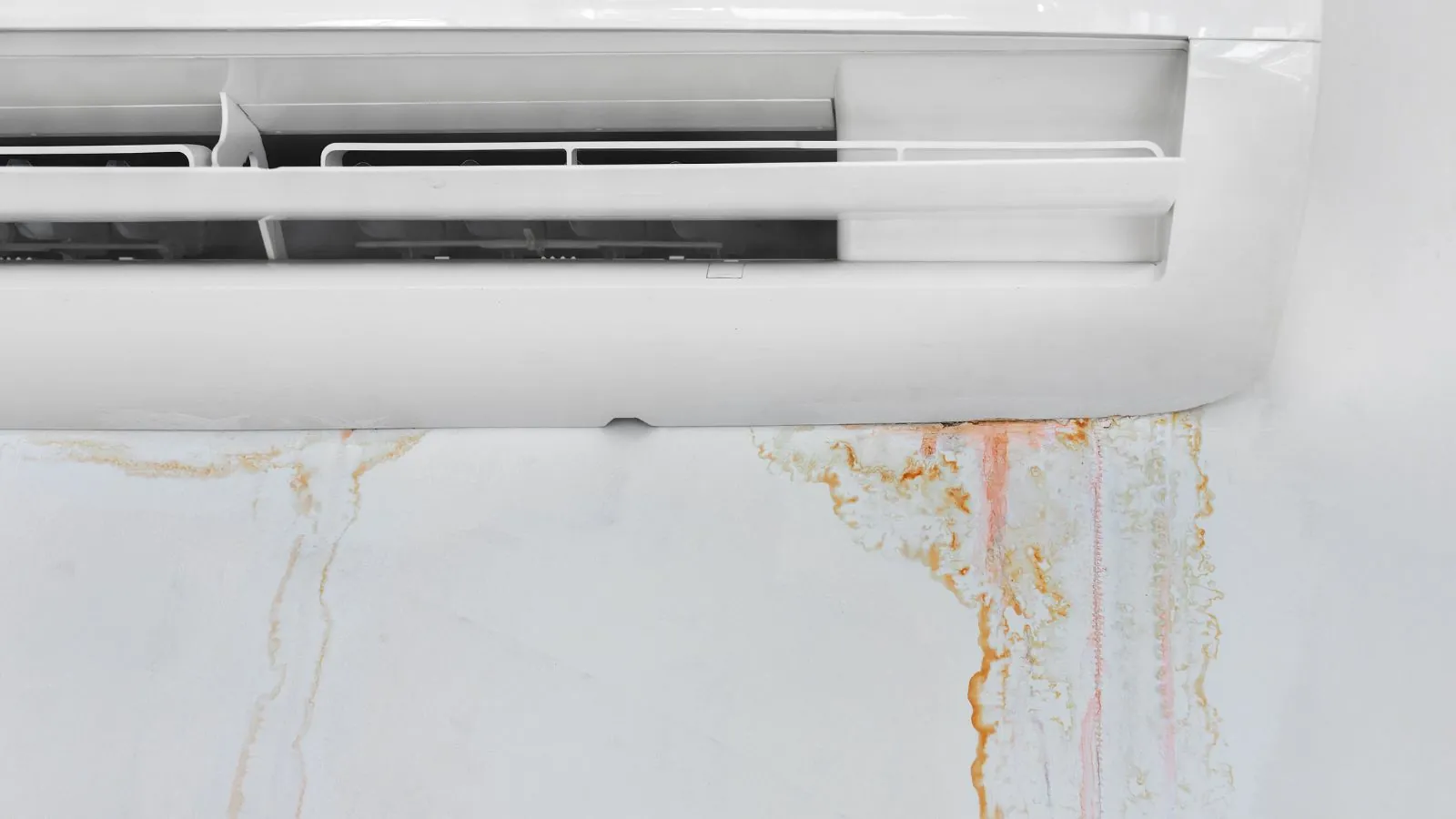
AC leak water damage repair in Waukegan is the drying and repair work that follows an air conditioner or air handler that drips, overflows or backs up its drain line. The damage is usually slow and hidden, which makes it easy to miss until a ceiling stain or a damp closet floor shows up. Turn the system off at the thermostat and call dispatch if water is reaching drywall, flooring or insulation.
Why air conditioners leak inside the house
Cooling air removes moisture, and that water has to leave the house through a condensate drain line. The line can clog with algae and debris, the drain pan can crack or rust, and a frozen evaporator coil can thaw and overflow. Any of these puts water where the equipment sits, which is often an attic, a closet or a basement utility area.
Many homeowners call because a condensation line has been backing up, or because they found a wet spot in a closet that shares a wall with the air handler. Both are the same problem seen from different rooms.
| Where the air handler sits | What gets wet | First sign you notice |
|---|---|---|
| Attic | Insulation, ceiling drywall below | Brown stain on an upstairs ceiling |
| Closet or hall utility space | Closet flooring, adjoining wall | Damp carpet or a musty smell in the closet |
| Basement or utility room | Floor, nearby walls, stored items | Puddle near the unit in summer |
| Wall or window unit | Wall surface and trim below | Streaks and stains running down the wall |
What to do the day you find it
- Set the thermostat to off, so the unit stops making more condensate.
- Check whether the drain pan is full and whether the drain line outlet is dripping, which shows whether the line is clear.
- Dry the area you can reach with towels and a household fan, and move contents out of the wet space.
- Call an HVAC technician to clear the line or replace the pan, and call dispatch for the wet building materials.
This is not usually a middle-of-the-night emergency, but water reaching a ceiling or an electrical fixture is. For that case, see ceiling water damage repair and call the utility or 911 for any electrical risk before you call us.
Drying and repair after an AC leak
Crews map moisture with a meter and thermal camera, starting at the equipment and working outward. Wet insulation in an attic is removed and replaced because it will not dry reliably in place. Closet flooring and the base of the wall are checked, and wet carpet and pad are lifted if they have been damp for days.
AC leaks last longer than pipe bursts because they trickle, which gives mold time to start in a damp cavity. If you see or smell growth, mold remediation is a separate step after the water source is fixed and the area is dry. The drying process itself follows structural drying.
AC leaks in Waukegan homes
Cooling season in northern Illinois is short compared with the South, so a drain line that clogged last summer may not show its failure until the first hot week. A technician checking the line in spring is cheaper than drying a ceiling in July. If your air handler sits in an attic or a closet, tell the technician, because a leak there can reach ceilings below.
In multi-unit buildings, an AC leak can reach the unit below. Tell the building manager at once, and photograph the stain and the unit.
What affects the cost
The price is set after the crew has seen the damage, and it is explained before work. These factors set the price for an AC leak.
| Factor | What moves the price |
|---|---|
| How long it leaked | Slow leaks soak more material than a single overflow. |
| Location of the unit | Attic leaks involve insulation and ceilings, closet leaks involve flooring. |
| Materials wet | Insulation, drywall and carpet each have different outcomes. |
| Drying days | Enclosed cavities dry slowly without airflow. |
| Finish repair | Ceiling texture and paint come last. |
Homeowners policies often treat sudden AC drain overflow as accidental water damage, while gradual seepage over a long time is commonly excluded. Ask your insurer before you decide, and keep the technician invoice that names the cause.
Drying after an air handler overflow uses the moisture-measurement approach described in the published ANSI/IICRC S500 standard for water damage restoration.
Frequently asked questions
Why is water coming from my air conditioner inside the house?
The condensate drain line is the usual cause. It clogs, the pan overflows, and water spills into the attic, closet or ceiling. A frozen coil that thaws can do the same.
Can I clear the drain line myself?
Some homeowners flush a clogged line with a wet vacuum at the outlet, but a technician should check the pan and the line. Do not run the system while water is still reaching drywall.
Will an AC leak cause mold?
Damp insulation and drywall can support mold growth if they stay wet. Drying fast and fixing the source are the best defenses, and testing or remediation is a separate step.
Does homeowners insurance cover AC leak damage?
Sudden overflow is often covered as accidental water damage. Slow seepage over months often is not. Read your policy or ask your insurer.
Do you repair air conditioners?
No. An HVAC technician repairs the equipment, and we dry and repair what the water damaged.
Turn the system off at the thermostat, then call so a crew can check how far the moisture has traveled.