
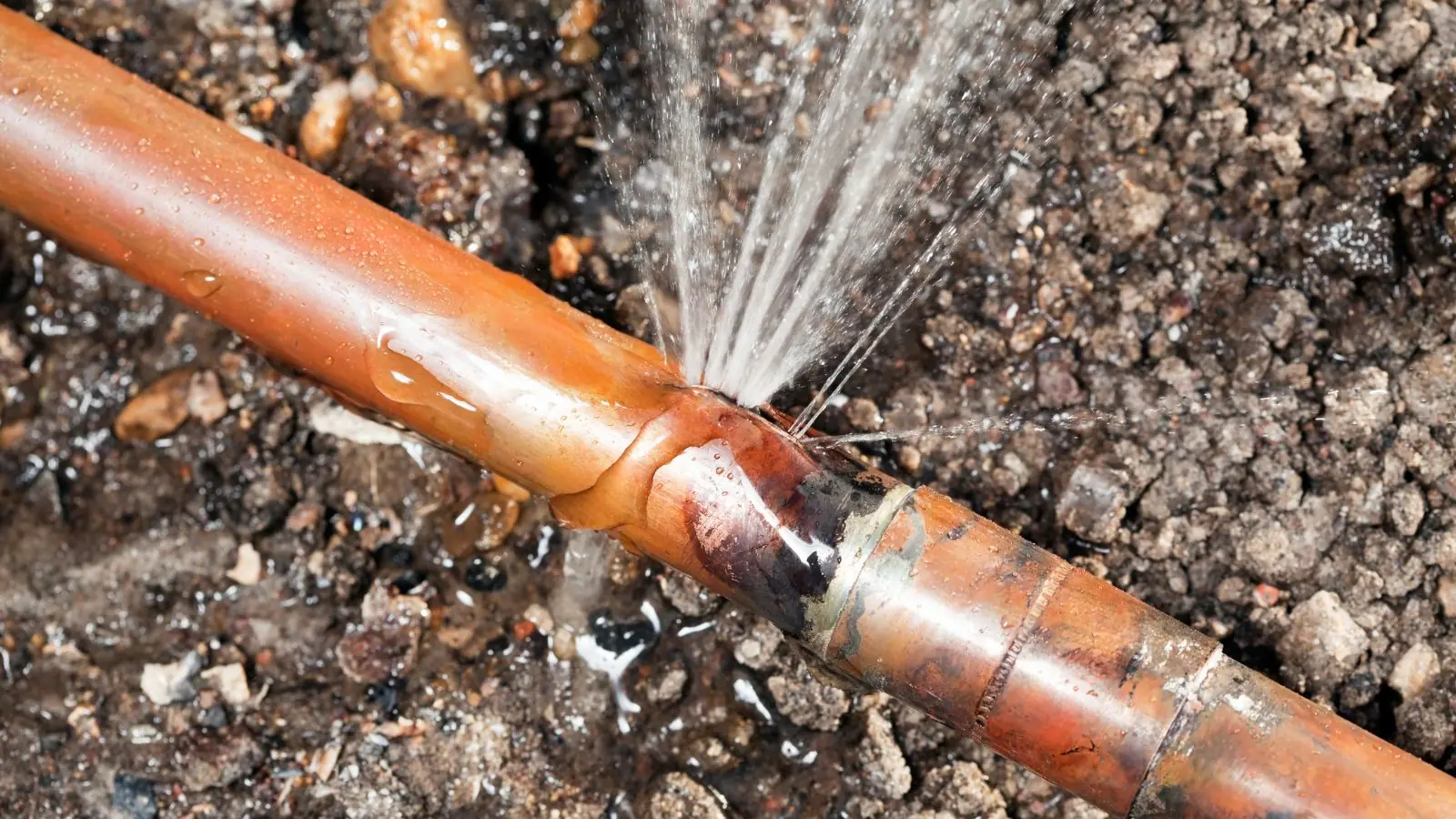
Burst pipe water damage in Waukegan is the cleanup after a pressurized supply line splits, a joint lets go or a fitting fails and water flows until someone closes a valve. This is an emergency from the first minute. Call the 24/7 dispatch line, shut the water off at the main, and use the steps below while a crew is arranged.
Burst pipe emergency: what to do first
Pressurized supply lines keep pushing water until the valve is closed, so the shutoff comes before anything else. In most Waukegan homes the main shutoff sits where the water line enters the house, often in a basement or utility area near the meter. Turn it clockwise until it stops, then open a faucet on the lowest floor to drain the lines.
- Close the main shutoff, then drain the lines by opening a low faucet.
- If the pipe is near the electrical panel, outlets or a ceiling light, do not touch any switch in a wet area. For any spark, burning smell or gas odor, the utility or 911 comes before this call.
- Move furniture, rugs and electronics away from the wet area, and put foil or plastic under furniture legs that must stay.
- Call dispatch and describe where the water came from and how long it ran.
How burst pipes damage a house
A pipe inside a wall can run for a long time before anyone sees it. Water follows framing downward, soaks insulation and shows up as a bulge in paint or a stain on the ceiling below. A pipe under a sink floods the cabinet floor first, then the flooring beside it.
Most burst lines in houses are copper, PEX or older galvanized steel, and each fails differently. Copper tends to split along a seam or at a soldered joint, PEX fails at fittings, and galvanized steel corrodes through from the inside. A plumber has to repair the line. A restoration crew handles what the water touched.
Cleanup and drying after the pipe is shut off
Crews start by finding every wet surface, not only the visible ones. A moisture meter and a thermal camera show wet drywall and insulation behind paint. Extraction units remove pooled water, then wet baseboards, saturated insulation and soft drywall near the floor are cut out so the cavity can dry.
Air movers and dehumidifiers then run until the meters read dry. How long that takes depends on the walls and floors involved. Our structural drying page explains the equipment and the readings used to call a room dry.
| Where the pipe failed | What usually gets wet first | What to tell dispatch |
|---|---|---|
| Inside a wall cavity | Insulation, drywall, then the floor below | Which wall and which floor is under it |
| Under a sink or vanity | Cabinet base and nearby flooring | Cabinet material and floor type |
| In a ceiling or upper floor | Ceiling drywall, light fixtures, rooms below | Whether lights or fans are on that circuit |
| In a basement or utility room | Floor, stored items, mechanical equipment | Depth of water and what is stored there |
Burst pipes in Waukegan housing
We cannot say what pipe any particular house has, and homes in the Near North Historic District, which date from the 1840s to 1928, are no exception. Mixed piping in one house means more joints and more places for a failure. If your house has older and newer pipe joined together, mention it to the plumber when you call for the repair.
Because the City of Waukegan system supplies water from Lake Michigan, a burst supply line puts clean water into the house at first. That is the best case for cleanup, but only if the water comes out quickly. After a day of soaking, drywall and carpet pad are harder to save.
Cost factors for burst pipe cleanup
Price depends on how far the water went, and scope and price are explained before work starts. A single wet cabinet is a small job. A line that ran for hours behind a finished wall is a larger one.
| Factor | What moves the price |
|---|---|
| Run time of the leak | Longer runs reach more rooms and floors. |
| Water category | A clean supply line is the simplest case. |
| Square footage affected | More wet area means more equipment and days. |
| Materials removed | Insulation, drywall and flooring have to be replaced. |
| Access | Water in walls and ceilings takes more time to dry out. |
Sudden and accidental pipe failure is often covered by a homeowners policy, while slow leaks that went unnoticed for months often are not. Your policy wording decides, so read it or ask your insurer, and keep the damaged pipe section if the plumber removes it.
A pipe that failed in winter may have frozen first, which is covered on the frozen pipe page. If the leak was in the kitchen, kitchen water damage restoration covers cabinets and countertops.
Industry practice for drying after a pipe failure follows the ANSI/IICRC S500 standard, which calls for measuring moisture before, during and after the work.
Frequently asked questions
Do you handle burst pipe emergencies at night or on weekends in Waukegan?
Yes. Dispatch picks up at any hour of any day, and a burst pipe at night gets the same intake as a daytime call. Close the main valve first and have the location of the leak ready.
Do I need a plumber or a restoration company first?
Both, in order. A plumber repairs the pipe so the water stays off. A restoration crew removes the water and dries what got wet. Dispatch can talk you through the shutoff while you arrange the repair.
How long can water sit before drywall is ruined?
Drywall starts to soften within a day of steady saturation and often needs replacing after longer exposure. Faster extraction gives the best chance to dry it in place.
Should I keep the broken pipe section?
Yes, if the plumber hands it to you. It shows where and how the pipe failed, and your insurer may want to see it or a photo of it.
Will my insurance cover a burst pipe?
Sudden and accidental pipe failure is often covered, subject to your policy and deductible. Gradual leaks and neglected maintenance often are not. Ask your insurer and keep photos of the damage.
Close the main, then call. The dispatcher will ask where the water is going and what it has reached.