
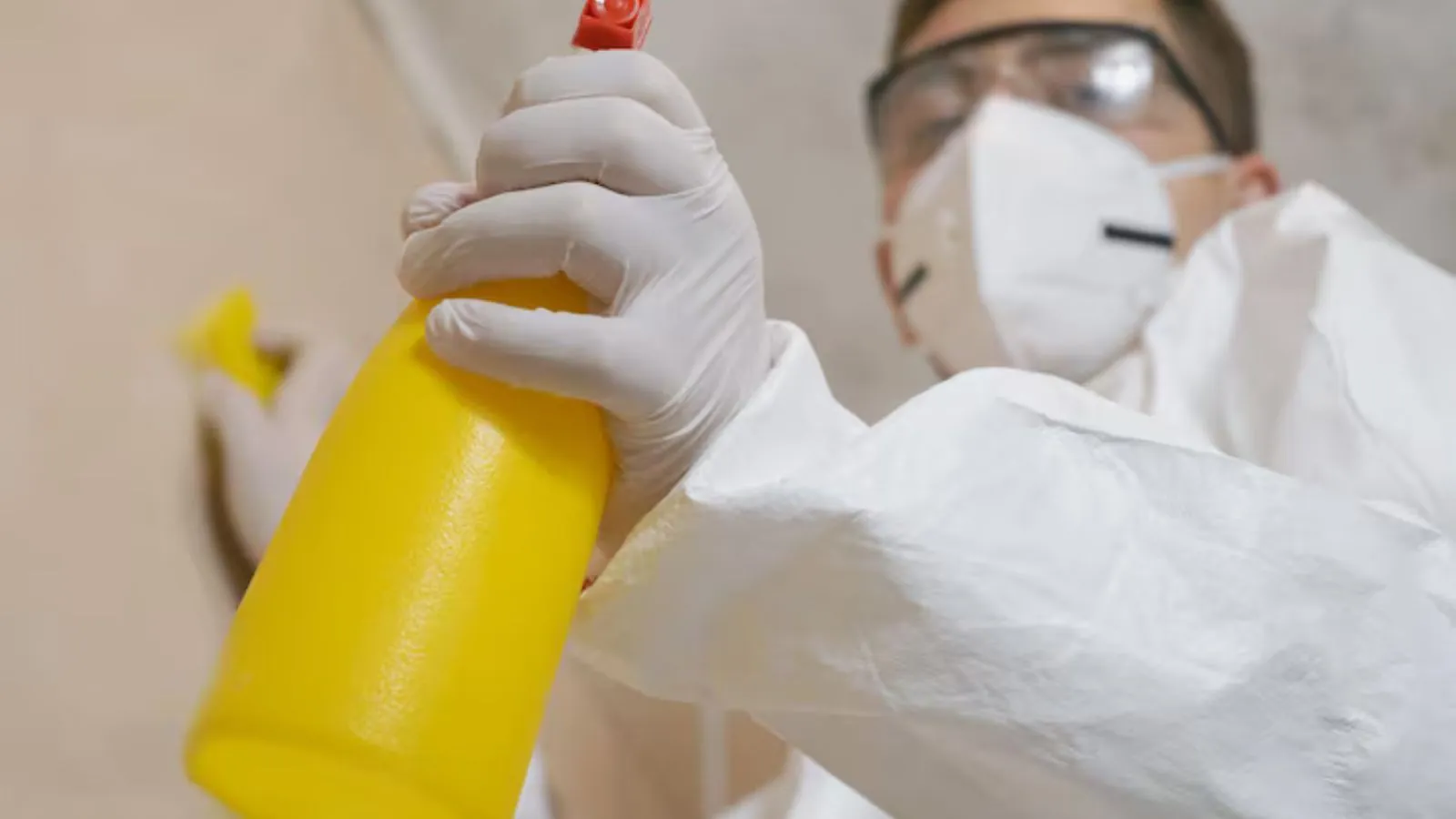
Mold remediation in Waukegan is the process of finding the moisture that fed mold, containing the affected area, removing growth and contaminated materials, and checking the space afterward. Mold needs moisture to grow, so a spot on a ceiling or a closet wall almost always points to a leak, condensation or a wet building material. Call dispatch if you see growth, smell a musty odor or found damp material after a leak.
A damp closet, spots in the bathroom and a smell you cannot place
Most callers do not start with the word remediation. They describe a damp spot in a closet, dark spots where a bathroom wall meets the ceiling, carpet that smells after a leak, or a basement stairwell that smells off. Often the leak came first, from an upstairs toilet, an air conditioner drain line, a sink, a roof or a siding failure, and the mold followed.
That is why the first question we ask is about the water. Cleaning growth without stopping the moisture means it returns, so the leak is repaired and the area dried before remediation is judged finished.
How a mold job is assessed
Assessment starts with a visual inspection and moisture readings. A moisture meter and thermal camera show where materials are wet, which often reveals more affected area than the visible spots. Testing, where it makes sense, is a decision between you and an independent professional, and health questions about exposure belong to your doctor.
| Step | What happens | Why it matters |
|---|---|---|
| Find and stop the water | Plumber, roofer or HVAC technician repairs the source | Growth returns if moisture continues |
| Inspect and map | Moisture readings and visual survey | Shows the real size of the affected area |
| Contain | Plastic barriers and negative air | Keeps spores from spreading to clean rooms |
| Remove | Contaminated material removed, surfaces cleaned with HEPA vacuums | Takes the growth out rather than covering it |
| Dry and verify | Dehumidification, then clearance check | Confirms the space is ready for repair |
What remediation involves, step by step
Remediation follows the ANSI/IICRC S520 standard for professional mold remediation, and you can ask any company whether its crews work to it. Crews seal the work area with plastic sheeting and run air scrubbers with HEPA filtration to keep air moving out through a filter. Porous materials with growth, such as drywall, insulation and carpet, are removed and bagged.
Hard surfaces and framing are cleaned with HEPA vacuums and damp wiping. Wood framing can sometimes be cleaned or sanded. Drying equipment then removes the remaining moisture, as described on the structural drying page.
- No bleach spraying over a wall and calling it done. Surface treatment does not remove growth inside porous material.
- No promise that mold will never return. If moisture returns, growth can return.
- No scope of work until the moisture source is understood.
Independent clearance testing and selling a home
Buyers, sellers and lenders sometimes ask for proof that mold was removed. An independent assessor, not the remediation company, can inspect the area and test after the work to confirm the space meets the agreed standard. We make no promise about whether a lender or buyer accepts any report, because that decision is theirs.
If you are selling and mold was found during an inspection, the sequence is the same. Fix the moisture, remediate under a written scope and keep the documents. A disclosure question belongs to a real estate attorney or your agent.
Illinois mold remediation rules
Illinois passed the Mold Remediation Registration Act, Public Act 103-0893. The Illinois Department of Public Health says registration is not in effect until its rules are adopted, and it published proposed rules in October 2025. Because this status can change, check the IDPH mold remediation registration page, and ask any company you hire whether it is registered once the program starts.
Mold remediation in Waukegan homes
The usual moisture sources in this area are the same as anywhere in a cold climate. Cold exterior walls and unheated spaces collect condensation, and bathroom exhaust fans that vent into attics add humidity. A basement in any house may hold humidity that ventilation does not clear, so a humidity reading is a better guide than the age of the house.
Practical tie-back: if the growth is on a basement wall or stairwell, check where the moisture is coming from. Condensation, a plumbing leak and seepage all produce similar spots but need different fixes. See basement water damage cleanup if the room has been wet, and AC leak water damage for condensate line problems.
What affects the cost
Cost is explained before work, based on what the crew finds. Mold costs depend on a few clear factors.
| Factor | What moves the price |
|---|---|
| Affected area | Larger areas need more containment and removal. |
| Materials involved | Porous materials are removed, framing can be cleaned. |
| Moisture source | A repaired source keeps the scope focused. |
| Access and containment | Ceilings, crawl spaces and tight spaces take longer. |
| Testing and clearance | Independent assessment is a separate cost. |
Mold from a sudden covered leak is sometimes covered, but many policies limit or exclude mold. Read your policy for mold language and ask your insurer before work begins, and keep photos of the growth and the water source.
If mold followed a leak in a carpeted room, carpet water damage restoration covers what happens to carpet and pad. For a wet wall, see wall and drywall water damage repair.
Frequently asked questions
How do I know if it is mold?
Look for fuzzy or dark spots, a musty smell and a history of moisture. Only testing or an inspection can confirm, and not every stain is mold.
Can I clean mold with bleach?
Bleach on a porous surface does not remove growth inside it. Small areas on hard surfaces can be cleaned, but larger or recurring growth needs the moisture source fixed and the material removed.
Will the mold come back?
No one can promise that. Mold returns if moisture returns, so the repair of the water source is part of the job.
Do I need independent testing after remediation?
It is a choice, and lenders or buyers sometimes ask for it. An independent assessor performs it, and we make no promise about whether a lender accepts any report.
Does Illinois license mold remediation?
Illinois passed a registration act, but the Illinois Department of Public Health says registration is not in effect until its rules are adopted. Check the IDPH page for the current status.
Leave it undisturbed and call. Scrubbing or spraying can spread spores into other rooms.