
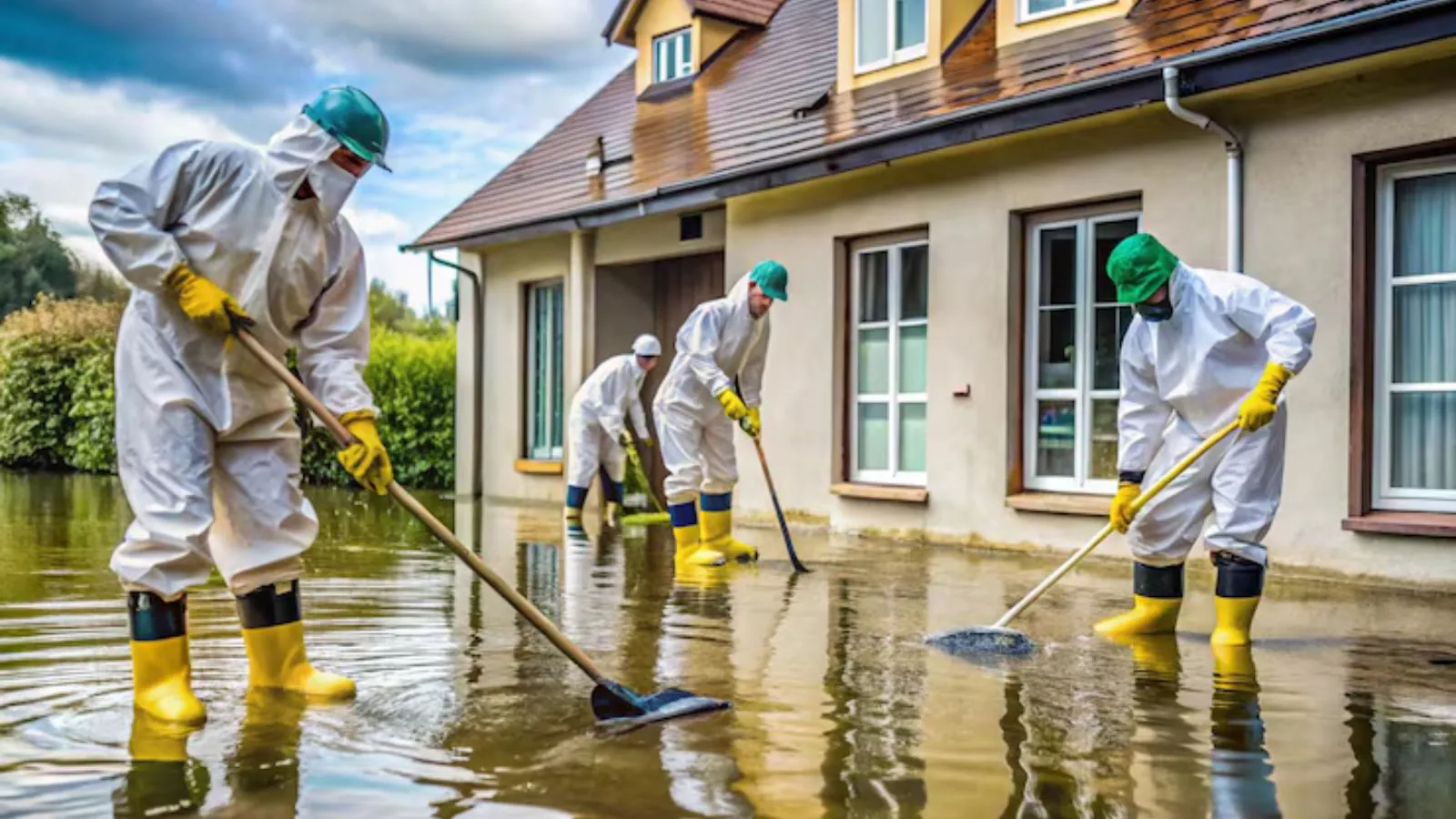
Emergency flood damage cleanup in Waukegan is the removal of water that came from outside the plumbing system, such as heavy rain, overflowing drainage or a rising river, and the drying and sanitizing that follows. Flood water carries soil and bacteria, so the job is different from a pipe leak. Call the 24/7 dispatch line, stay out of the water, and use the safety steps below while a crew is arranged.
Flooding is an emergency: what to do right now
- Do not walk or wade through flood water. It can hide debris, hold contamination and conceal live electrical hazards.
- If water has reached outlets, appliances or the panel, do not switch anything on or off, and call the utility or 911 before you call us.
- Do not run a household vacuum or fans in flood water. Standard equipment is not rated for it.
- Move to higher ground within the home and lift medications, documents and valuables above the waterline.
- Photograph the waterline on each wall before anything is moved or discarded.
Nights, weekends and holidays use the same dispatch line, and an available crew can usually be sent the same day.
Why flood water is handled differently
Water that moves across yards, streets and storm drains collects soil, fertilizer, motor oil and bacteria on the way. Industry practice under ANSI/IICRC S500 treats flood water as Category 3, which changes what can be saved. Porous materials such as carpet, pad, insulation and soaked drywall are usually removed rather than dried.
Hard surfaces and framing can often be cleaned, sanitized and dried in place. Crews wear protective suits, gloves and boots and use extraction units, then apply antimicrobial treatment before drying equipment goes in. Contents are sorted by what can be cleaned, what is porous and what has to go.
| Material | Usual outcome after flood water | Why |
|---|---|---|
| Carpet and pad | Removed | Cannot be sanitized reliably |
| Drywall and insulation | Removed to above the waterline | Wicks and holds contaminated water |
| Hardwood and laminate | Often removed, case by case | Swells and traps water below |
| Concrete and framing | Cleaned, sanitized, dried | Hard, cleanable surfaces |
| Upholstered furniture | Usually discarded | Porous and difficult to sanitize |
Flood risk in Waukegan, and what we will not guess
Waukegan sits on the Lake Michigan shoreline, and the Waukegan River runs through the city to the harbor. Lake County operates a Stormwater Management Commission that tracks flood response and floodplain rules. We do not state flood zones or storm dates from memory, because the right source is the FEMA Flood Map Service Center. Look up your address there before you decide whether to buy flood insurance.
Practical tie-back: if your home is near the harbor, the river corridor or a low yard, ask the City of Waukegan building department what applies before you start repairs after a flood. Permit and substantial damage rules are theirs to explain.
Flood insurance is a separate policy
The Illinois Department of Insurance says standard homeowners and renters policies exclude flood damage, so flood coverage is bought on its own. It typically takes effect 30 days after purchase, which means a policy bought during a storm warning will not help. If you already have flood coverage, call your insurer early and take photos before cleanup starts.
What affects the cost
Nothing begins until the scope and price are laid out for you. Flood jobs cost more than clean-water leaks for specific reasons.
| Factor | What moves the price |
|---|---|
| Contamination category | Category 3 water requires removal and sanitizing steps. |
| Depth and area | Deeper, larger floods mean more extraction and debris. |
| Materials removed | Pad, drywall and insulation are replaced after drying. |
| Drying days | Structures stay wet longer when flood water soaked framing. |
| Rebuild scope | Cabinets, flooring and finishes come after the structure is dry. |
If the water came up through a floor drain, sewage backup cleanup has the safety rules for that case. A flooded lower level is covered in basement water damage cleanup, and a roof or window failure during a storm is on the storm water damage page.
Frequently asked questions
Do you handle flood damage emergencies at night or on weekends in Waukegan?
Yes. The line is staffed 24 hours a day, every day, and flood calls get the same intake as any other emergency. Tell dispatch how deep the water is and where it came from.
Can I clean up flood water myself?
Small amounts on hard surfaces can be cleaned with gloves, boots and disinfectant. Anything deeper than a puddle, or anything that reached carpet, drywall or electrical, is better left to a crew with the right gear.
Does homeowners insurance cover flood damage?
Usually not. The Illinois Department of Insurance says flood needs a separate policy. Water from a burst pipe is a different case and is often covered. Ask your insurer which one applies to your loss.
How do I check my flood risk?
Use the FEMA Flood Map Service Center for your address and ask the City of Waukegan building department about local floodplain rules.
What happens to my carpet after a flood?
Carpet and pad that sat in flood water are normally removed. Contaminated pad cannot be sanitized reliably, so crews cut it out and dispose of it.
Tell dispatch how high it has risen and where it entered. Plain steps will follow while a crew is arranged.