
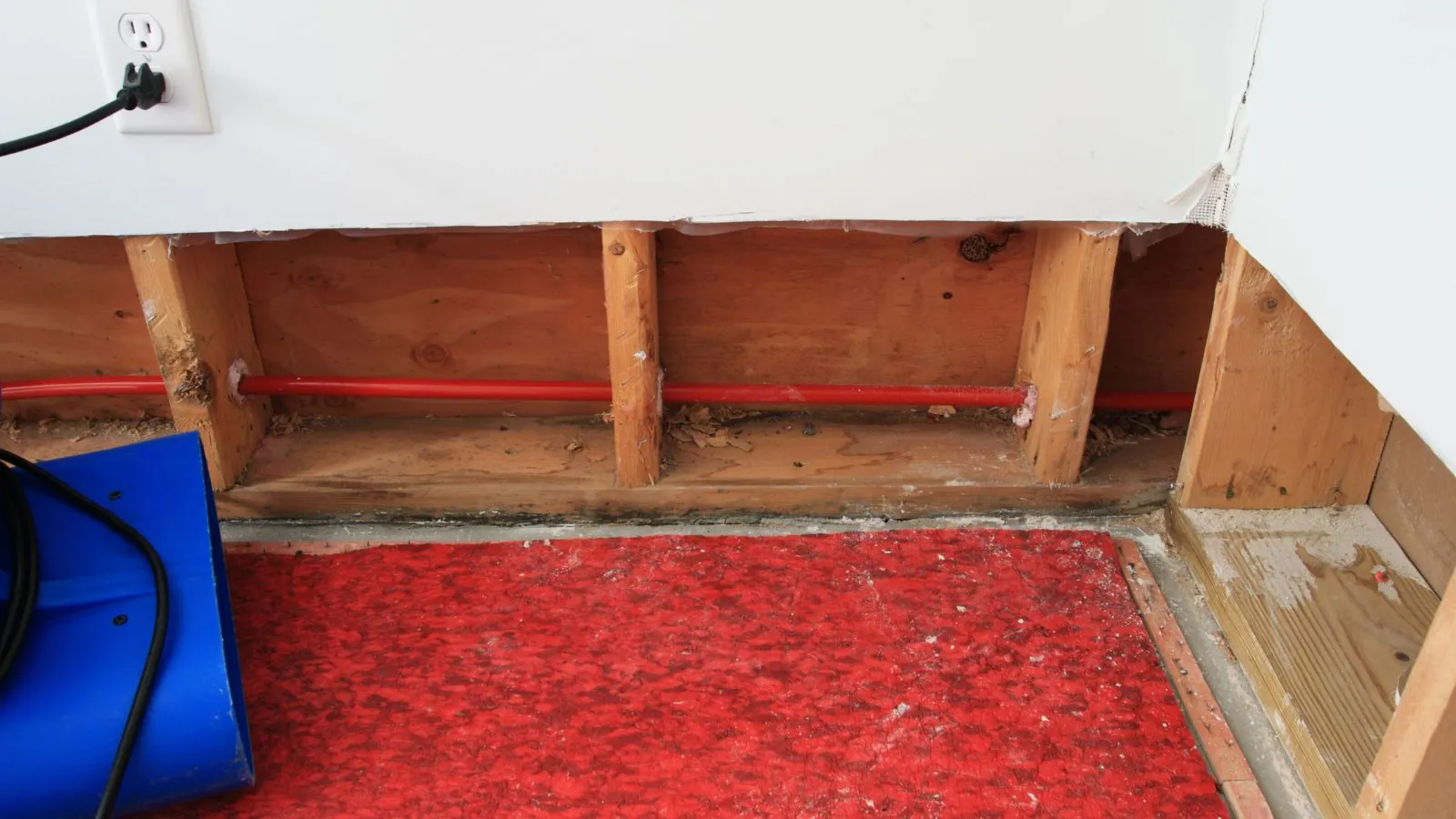
Structural drying and dehumidification in Waukegan is the process of removing moisture from framing, drywall, flooring and air after water damage, using air movers, dehumidifiers and moisture meters. It is the stage after the standing water is pumped out and before repairs begin. Call dispatch if walls or floors still feel damp, if the air is heavy or if a musty smell has started.
Damp walls, cool carpet and a musty smell days later
People do not search for structural drying by name. They notice walls that feel cool and damp, carpet that stays cold days after a leak, baseboards that warp, or a smell that gets stronger when the heat comes on. These are signs that water is still inside the structure, and that is the problem structural drying solves.
Surface drying with a household fan hides the problem. Wet framing, insulation and subfloors can hold moisture for weeks, and that long dampness is what starts mold and soft wood.
How moisture mapping works
Crews start with a moisture map. A pin or pinless moisture meter reads the water content of drywall, baseboards, wood and concrete, and a thermal camera shows cool, wet areas behind finished surfaces. Readings are recorded on day one and again each visit, so the drying progress is measured instead of judged by touch.
A dry standard is set from unaffected material in the same house, and equipment stays until the wet material reads close to it. That is how a crew decides a room is dry, and it is what a good drying log shows.
Equipment and what each piece does
- Air movers push dry air across wet surfaces and lift moisture off the material.
- LGR dehumidifiers pull that moisture out of the air so it does not settle back into the walls.
- Drying panels and floor mats pull moisture from under hard flooring and from wall cavities.
- Thermal cameras and moisture meters track whether the drying is working.
Equipment placement is part of the job. Too many air movers in one corner dry that corner and leave the rest wet. Crews adjust units each visit as the readings change.
| Material | How it dries | Typical sign it is not dry |
|---|---|---|
| Drywall | Air movers and dehumidifier, or cut out if saturated | Soft, cool or discolored to the touch |
| Wood framing | Slow, controlled airflow | Meter reads above the dry standard |
| Carpet and pad | Extraction first, then air movers | Cold, heavy or smelly after a day |
| Concrete slab | Dehumidification over days | Dark patches or damp flooring above |
Water mitigation and drying time
Water mitigation is the term for stopping further damage, and drying is its longest stage. A single room with clean water often dries in a few days, while a whole-floor loss or dense materials take longer. We do not quote a number without readings, because the building decides, not the calendar.
Drywall water damage that dries in place saves rebuild cost, but material that stays soft after drying is removed. For the stage before this one, see water extraction. If growth appeared before drying finished, mold remediation follows.
Structural drying in Waukegan homes
Older houses, including those in the Near North Historic District with buildings from the 1840s to 1928, can be built with materials that dry on a different schedule from modern drywall. Tell dispatch what era your house is so the plan fits the structure. Humid summer air slows drying if windows stay open, so crews usually keep the space closed while equipment runs.
The practical point is simple. Do not turn the equipment off early, and do not open the house up to see how it is doing. Wait for the readings.
What affects the cost
The crew lays out scope and price first, then waits for your go-ahead. Drying costs depend on the building and the readings.
| Factor | What moves the price |
|---|---|
| Wet square footage | More area needs more air movers and dehumidifiers. |
| Material density | Hardwood, plaster and concrete dry slower. |
| Equipment days | Equipment runs until the readings reach the dry standard. |
| Water category | Contaminated water adds cleaning before drying. |
| Access | Closed wall cavities and floors need panels or opening. |
Drying is typically part of an insurance claim for sudden water damage. Keep the drying log and daily readings, because insurers often ask for them. Ask your insurer which documents they need.
Frequently asked questions
How long does structural drying take?
Often a few days for one room, and longer for a whole floor or dense materials. Moisture readings decide, not a fixed schedule.
Can I dry the house with a hardware store dehumidifier?
A small unit helps with humidity but does not match commercial LGR dehumidifiers or the airflow of air movers. For structural moisture, ask dispatch what the crew would use.
Why are the machines so loud?
Air movers and dehumidifiers run continuously to move large volumes of air. The noise is part of the drying process, and the equipment is removed when readings are dry.
How do you know the walls are dry?
By comparing meter readings on wet materials to a dry standard from unaffected material, and by checking with a thermal camera.
Will drying stop mold?
Drying quickly removes the moisture mold needs, but it cannot remove mold that is already growing. If you see or smell growth, mold remediation is a separate step.
Describe how long they have been wet. Dispatch will explain how moisture readings guide the drying plan.