
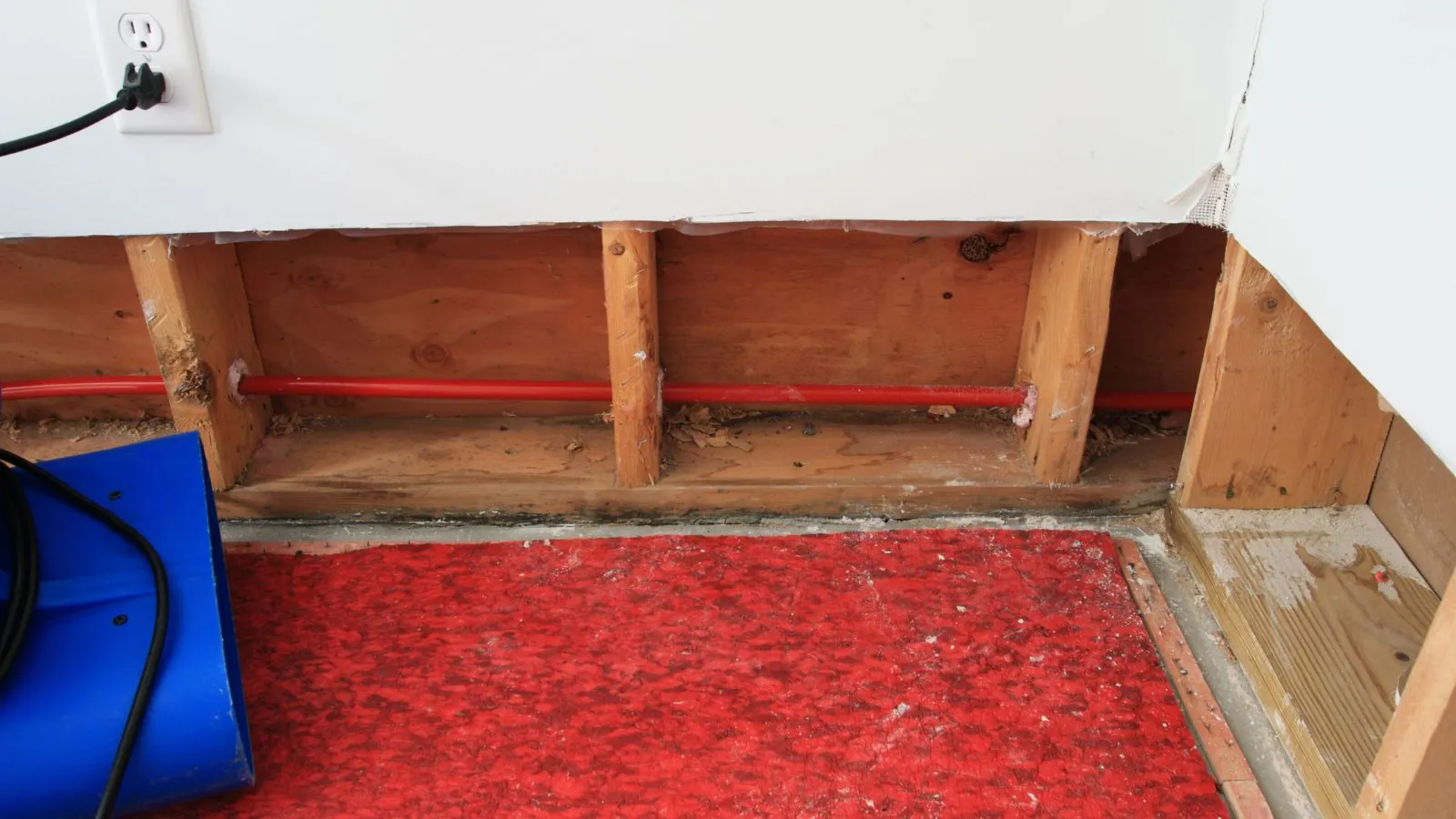
The question every homeowner asks after a leak is how long the equipment will run. The honest answer is that it depends on the building, and a crew that quotes a number without readings is guessing. A single room with clean water often dries in a few days. A whole floor, thick materials or contaminated water take longer.
This guide explains what drives the timeline, how drying is measured and what a homeowner can do to help.
What sets the drying time
| Factor | Effect on drying time |
|---|---|
| How fast extraction started | Removing water early shortens everything after it |
| Materials involved | Concrete, hardwood and plaster dry slower than carpet or drywall |
| Area and depth | Larger or deeper loss means more to dry |
| Water category | Contaminated water adds cleaning before drying |
| Humidity and temperature | Humid, cool conditions slow evaporation |
| Equipment and airflow | The right number of air movers and dehumidifiers speeds it up |
The materials make the biggest difference. Carpet fibers dry in hours with airflow, while the pad and subfloor take days. Concrete holds water for a long time and gives it up slowly.
How drying is measured
Crews record moisture readings from the wet materials on the first day and compare them with a dry standard taken from similar material in an unaffected part of the house. Readings are repeated each visit, and equipment is moved as areas dry. The job ends when the readings reach the standard, not when the calendar says so.
The process is described on the structural drying page, and the published ANSI/IICRC S500 standard covers water damage restoration practice. You can ask any company whether its crews work to it and whether you will get the readings.
A typical sequence, without promising days
- Extraction removes standing water first, which is why it comes before everything else.
- Materials that cannot dry are removed so cavities can breathe.
- Air movers and dehumidifiers run, and readings are taken each visit.
- Equipment is removed when readings reach the dry standard.
- Repairs begin only after the structure is dry.
If the first stage is delayed, everything after it takes longer. The water extraction page explains why the bulk water has to go first.
What a homeowner can do to help
- Keep doors and windows closed while equipment runs, so the dehumidifiers work on the wet air in the house and not the outside air.
- Do not turn off the equipment, and do not move it.
- Keep the heat at a normal level, because warmth speeds evaporation.
- Remove personal items from wet rooms, and keep pets and children away from equipment.
Signs the house is not dry yet
A cool or damp feel on walls, a musty smell, baseboards that stay swollen and a meter that reads above the standard all mean there is more to do. If growth appears before drying finishes, mold remediation is a separate step after the moisture source is gone.
Waukegan drying notes from primary sources
The Near North Historic District in Waukegan, listed on the National Register of Historic Places in 1978, has buildings from the 1840s to 1928. Older construction can differ from modern drywall and poured concrete, so tell the crew the age of your house and what the walls and floors are made of.
The City of Waukegan water system draws from Lake Michigan. A supply line leak begins with clean municipal water, which is the simplest category to dry if it is handled quickly.
Homes in Wadsworth and Lake Villa dry by the same measurement rules, and the structure, not the town, sets the timeline.
Why humidity outside matters inside
Drying works by moving moisture from wet materials into the air and then out of the house. Dehumidifiers do the pulling. If the air outside is humid, as it can be in a Waukegan summer, the equipment has more work to do, and drying can take longer.
Cold weather brings its own limit. Cold air holds less moisture, so crews may heat the space to help it release water. That is why a winter job and a summer job in the same room can look different, even when the damage is the same.
Closed doors and windows, shut-off vents and a steady temperature all help. Opening windows to ventilate can work against the equipment on a humid day. Follow the crew's lead on this, and see structural drying and dehumidification for how the readings are used. Wall cavities are covered in wall and drywall water damage repair.
Be wary of anyone who names an exact number of days before the crew has taken readings. Drying is a process you measure, not a timer you set. The honest answer is a range that gets narrower once the crew has seen the materials, checked the humidity and watched the first day of progress.
Ask for the readings in writing at each visit. Seeing the numbers fall day by day is the best proof that the plan is working, and it lets you plan when rooms will be usable again.
Frequently asked questions
How many days will the equipment run?
It varies. A room with clean water often dries in a few days, and larger or denser losses take longer. Readings decide.
Can I shorten the drying time?
Starting extraction early, keeping the house closed and leaving the equipment on are the best ways.
Why is my floor still wet after the carpet is dry?
Pad, subfloor and slab hold water longer than carpet fibers. They need their own drying time.
Does drying prevent mold?
Quick drying removes the moisture mold needs. It cannot remove growth that has already started.
How do I know it is done?
Moisture readings match the dry standard, and the crew can show you the log.
Say how long materials have been wet. Dispatch will explain how drying is measured.