
Basement mold is common because basements stay cool, hold humidity and sit against the ground. Homeowners in Waukegan ask how to remove it, and the honest answer has two parts. Small spots on hard surfaces can be cleaned with care. Anything larger, recurring or on porous material needs the moisture source fixed first, and often a crew.
This guide covers what you can safely do yourself and where to stop. It makes no health claims, and questions about exposure belong to your doctor.
Find the moisture before you clean anything
Mold needs moisture. If you scrub a wall and the cause is a leak, condensation or seepage, the growth returns. Walk the basement with a flashlight and check for a few common sources.
- Plumbing: pipes, the water heater, the washing machine hoses and the sump discharge.
- Condensation: cold pipes and cold exterior walls in humid weather.
- Seepage: damp patches on walls or floor after rain.
- Dryer vents and bathroom fans that vent into the space instead of outside.
A plumber or drainage contractor fixes the source. For the wet building materials, basement water damage cleanup explains drying, and structural drying covers the equipment used.
What you can clean yourself
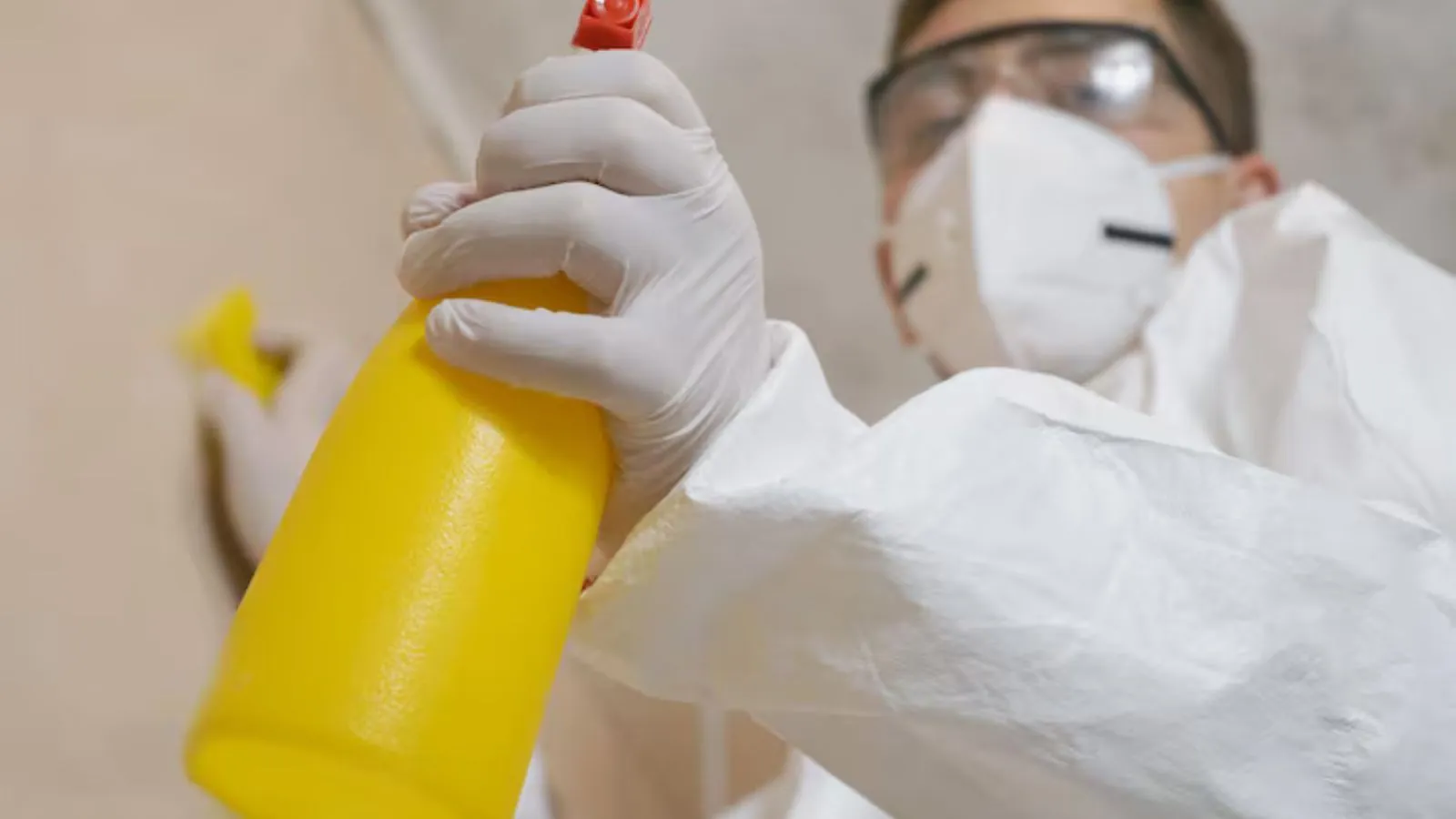
Small areas of surface growth on hard, non-porous materials such as sealed concrete, tile, metal or glass can often be cleaned by a homeowner. Wear gloves, eye protection and a well-fitting mask, keep the room ventilated and avoid spreading dust. Detergent and water, followed by thorough drying, is the basic approach.
Bleach does not solve the problem on porous materials because it does not remove growth inside them. Do not mix cleaning products, and do not use a household vacuum, which can spread spores through the house.
| Material | Homeowner clean? | Usual professional approach |
|---|---|---|
| Sealed concrete floor or wall | Small spots, yes | Clean and dry the surface |
| Painted drywall | Not reliable | Remove affected drywall |
| Carpet and pad | No | Remove and replace |
| Wood framing and joists | Not reliable | HEPA vacuum and clean, sometimes sand |
| Stored boxes and fabric | Clean or discard case by case | Discard porous items with growth |
When to call a professional
Call for help when the growth covers a large area, returns after cleaning, sits inside walls or on drywall and insulation, follows sewage or flood water, or comes with a persistent musty smell you cannot trace. Professional remediation follows the ANSI/IICRC S520 standard, using containment, HEPA filtration and removal of contaminated material.
The mold remediation page describes that process, including independent clearance testing and why we do not promise that mold will never return.
Prevent it from coming back
Keep basement humidity under control with a dehumidifier sized for the space, direct downspouts away from the foundation and fix leaks the day you find them. Store belongings off the floor on shelves with space around them, and avoid carpet on a concrete floor that gets damp.
Illinois and Waukegan notes from primary sources
The Illinois Department of Public Health says the Mold Remediation Registration Act is passed but not yet in effect, because registration depends on pending rules that the department published in proposed form in October 2025. Check the IDPH page for the current status before you hire.
Older Waukegan homes, such as those in the Near North Historic District, whose buildings date from the 1840s to 1928, can be built differently from newer ones, and the age and foundation of your own house matter more than the neighborhood. If your basement stays damp, ask a drainage contractor to look at it.
For households in Wadsworth or Lake Villa, a village building department can answer questions on drainage work and permits.
Basement habits that keep humidity down
Basements stay damp when air cannot move and water cannot leave. A few steady habits cut the odds of regrowth after a cleanup, and none of them require special tools.
- Keep boxes and furniture a few inches off the walls so air can circulate
- Store belongings in plastic bins instead of cardboard, which holds moisture
- Run a dehumidifier in humid months and empty it on a schedule
- Point downspouts away from the foundation and keep gutters clear
- Check pipes and the water heater for slow drips each season
A cheap humidity gauge shows whether the room stays in a sensible range. If readings climb after rain, the cause is outside the house and cleaning will not fix it. When growth has already spread, mold remediation covers containment and independent clearance, and basement water damage cleanup covers the water side.
One more point on timing. Mold that returns in the same spot after cleaning is usually telling you the moisture source is still active. Treat a repeat patch as a plumbing, grading or ventilation question first, and a cleaning question second.
Frequently asked questions
Can I remove basement mold with bleach?
Bleach does not remove growth inside porous materials like drywall or wood. Small spots on hard surfaces can be cleaned, but recurring or large growth needs the moisture fixed and the material removed.
Is basement mold dangerous?
We make no health claims. Questions about exposure belong to your doctor. From a building standpoint, mold signals moisture that damages materials and needs to be fixed.
How much mold is too much to clean myself?
Many guides suggest professional help for areas larger than a small patch, growth that keeps returning or any growth after sewage or flood water.
Do I need to test for mold in Waukegan?
Testing is a choice, often made when selling a home or when the source is unclear. An independent assessor does it, and the decision is yours.
How do I stop mold from returning?
Control the moisture. Fix leaks, manage humidity and direct water away from the foundation.
Tell the dispatcher how large the area is and where the moisture comes from.